7000 Bee Caves Rd #173, Austin, TX Mon-Fri: 7:00 AM - 9:00 PM · Sat-Sun: 7:00 AM - 6:00 PM
6+ Years in Austin · Licensed & Insured

Roofing Contractor in Austin, TX Built for Hail, Heat & Hill Country Roofs

Austin roofs take a beating. Spring hail rolls up the I-35 corridor, summer decks bake past 150°F, and Flash Flood Alley storms can dump several inches of rain in a few hours. Shingles that should last 25 years often wear out in 15. Most of that damage starts where you can't see it: bruised mats, cooked underlayment, flashing that's pulled loose. Bee Caves Roofing Pros repairs and replaces asphalt shingle, standing seam metal and tile roofs across west Austin. We pay close attention to underlayment, flashing and attic ventilation, because that's usually where Austin roofs fail first.

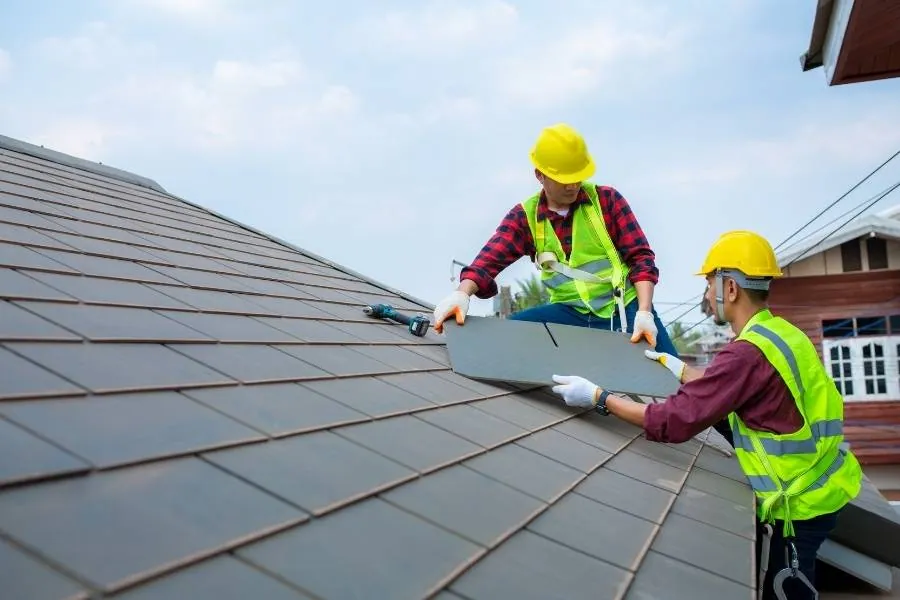
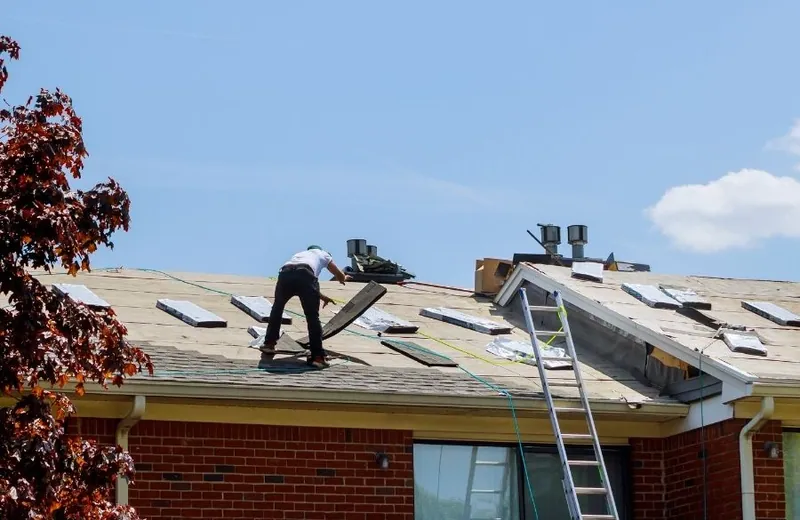
We're based on Austin's west side and work the Bee Cave Road corridor every week. That means steep pitches, complex rooflines, heavy live oak canopy and walls where the roof meets limestone or stucco. Our crews also cover Rollingwood, West Lake Hills, Sunset Valley and Shady Hollow. We plan every job for safe access and clean material handling. After hail and wind events we climb up and inspect, and every estimate comes with photos of exactly what we found.

  • Serving Austin homeowners since 2020
  • Bonded and insured
  • Photo documentation with every estimate

Since 2020, west Austin homeowners have trusted us with roofs that face Central Texas hail, heat and heavy spring rain. We back our work with photo documentation and bonded, insured crews.

Request Your Free Estimate

No obligation. Fast, honest quotes.

Your information is never shared.

Online Estimates
Onsite Service
Licensed & Insured
Customer Rated
Local Expertise

Why Austin Homes Need a Roofer Who Knows Central Texas

Austin sits where the Hill Country meets the Blackland Prairie. You get hail, heat, flash floods and the occasional ice storm, sometimes all in the same year. Add a housing stock that runs from 1920s bungalows to 2020s tract homes, and roofing here becomes a local specialty.

Hail, Triple-Digit Heat and Flash Flood Alley

The I-35 corridor regularly ranks among the most hail-prone regions in the country. Severe storms peak from March through June, with a smaller second round in fall, and 1- to 2-inch hailstones are common in strong cells. That size of hail fractures shingle mats, knocks granules loose, cracks tile and dents metal flashing. Summer adds another layer of stress. Highs sit in the mid-to-upper 90s from June through September, 2023 set a record for 100°F+ days, and dark roof surfaces climb well past 150°F. Heat oxidizes asphalt, breaks down sealant strips and bakes underlayment. Annual rainfall is only about 34 inches, but it tends to arrive in bursts that overwhelm valleys and gutters. Downbursts topping 60 mph lift tabs and ridge caps. Then there are freezes like Winter Storm Uri in 2021 and the February 2023 ice storm, which brought down live oak limbs across the city.

A Housing Stock Spanning a Century

Pre-war bungalows in Hyde Park, Travis Heights, Clarksville and Bouldin Creek often hide multiple shingle layers over original skip-sheathing, with very little attic ventilation. Post-war ranches in Allandale, Crestview and Zilker have low-pitch roofs that have been re-shingled several times, usually with undersized vents. Homes from the 1970s and '80s in Shady Hollow, Jollyville and Westlake have big, valley-heavy roofs, and many once had wood shake. Since the 1990s, tract development in Pflugerville, Manor, Buda, Circle C and Bee Cave has put builder-grade architectural shingles on OSB across thousands of homes. Many of those roofs are now hitting the end of a storm-shortened 12- to 20-year life. Up in West Lake Hills, Rollingwood and Barton Creek, you'll find standing seam metal, clay and concrete tile and slate on steep Hill Country and Mediterranean designs.

Permits, HOAs and Texas Insurance Law

Inside Austin's full-purpose jurisdiction, the Development Services Department requires a permit and inspections for re-roofing under its local version of the IRC. If a roof already has two layers, the code requires a full tear-off. West Lake Hills, Rollingwood, Sunset Valley, Bee Cave, Pflugerville, Manor and Buda each run their own permit process. Unincorporated areas like Shady Hollow, Manchaca and Hudson Bend often need little county paperwork, so HOA and insurer rules end up carrying more weight. Historic districts such as Hyde Park and Travis Heights–Fairview Park may need Historic Landmark Commission review before a visible material change. HOAs in Circle C, Steiner Ranch and Avery Ranch control color and profile, though Texas Property Code §202.011 limits bans on impact-resistant roofing. Texas Insurance Code Chapter 707 also makes it illegal for a contractor to waive your deductible.

Insurance Pressure and a Storm-Chaser Market

Most Austin insurers write wind and hail deductibles at 1 to 2% of dwelling coverage. On a $600,000 home, that's $6,000 to $12,000 out of pocket. Many also depreciate roofs by age. Class 4 impact-resistant shingles can qualify for premium discounts, and that's a big reason demand for them and for standing seam metal keeps climbing. Texas doesn't license roofers at the state level. After every big storm, out-of-state crews knock on doors across the metro, and some of them are gone before warranty problems show up. Homeowners here are right to want a local, bonded, insured contractor who documents everything in photos.

Know The Signs

Common Roofing Problems We Find on Austin Homes

Most of the roof problems we see in Austin come back to the same local causes: hail, heat, wind-driven rain, tree debris and shifting soils. Here's what each one looks like, why it happens here and how serious it is. That way you'll know when to call and when it can wait.

Hail-Bruised and Fractured Shingles

Serious

Hail hits hard enough to crush the asphalt mat under the granules or crack the fiberglass reinforcement. From the ground the roof often looks fine. The bruise weakens the shingle, and it starts leaking months later, usually after the window to file an insurance claim has gotten tight.

Why it happens here

Central Texas is one of the most hail-active regions in the U.S., and storms with 1- to 2-inch stones hit the metro most springs. Builder-grade architectural shingles on 1990s–2010s tract homes don't have impact ratings. Many roofs also carry old hail damage that was never repaired, or that a storm-chaser patched badly after an earlier claim. Shingles that have already been heat-aged are more brittle and fracture more easily on impact.

Signs to watch for
  • Dark, soft spots on shingles where granules are missing
  • Granules piling up in gutters or at downspout outlets
  • Dented gutters, vents, AC fins or mailboxes
  • Circular cracks or split shingle edges
  • Dings in metal flashing and ridge vents
  • New ceiling stains weeks after a storm
Local patterns

We see heavy hail clusters in Pflugerville, Wells Branch, Jollyville, Circle C and Buda, where tract homes with similar roofs stack up block by block. West-side homes under tree canopy sometimes get partial protection, so damage is often uneven across a single roof slope.

Our fix

We do a documented inspection with test squares and photos. Then we repair the damage or replace the roof, often with Class 4 impact-resistant shingles that may lower your premiums.

Heat-Aged, Brittle Shingles and Granule Loss

Moderate

Asphalt slowly oxidizes under UV and heat. Shingles dry out, curl, blister and shed their protective granules. As that happens, the sealant strips holding tabs down stop bonding, so the roof becomes more vulnerable to every wind and hail event that follows.

Why it happens here

Austin sits near 30°N latitude, so UV is strong all year. Summer roof decks regularly top 150°F, and the city now logs dozens of triple-digit days a year, with 2023 setting the record. Poor attic ventilation traps that heat under the decking and bakes the shingles from below too. That combination is why a 25-year shingle here commonly looks done at 15 to 18 years, especially on south- and west-facing slopes.

Signs to watch for
  • Curling or cupping tab edges
  • Blisters or bubbles on the shingle surface
  • Bare, shiny patches with exposed asphalt
  • Shingles that crack when lifted
  • Excessive granules in gutters
  • Attic temperatures far above outdoor temps
Local patterns

This shows up constantly on 2000s-era homes in Avery Ranch, Falcon Pointe and Mueller with undersized ridge or soffit venting. It also appears on Allandale and Crestview ranches with dark shingles and almost no shade.

Our fix

We assess how much life the roof has left, correct the attic ventilation and plan for replacement with reflective or cool-roof shingles when it's due.

Failed Step and Counter Flashing at Stone and Stucco Walls

Serious

Flashing is the metal that seals the joint where a roof meets a wall, chimney or dormer. When it's missing, rusted or simply caulked over, water runs behind the siding and into the wall cavity. Those leaks often show up far from where they started.

Why it happens here

Hill Country designs pair roofs with limestone and stucco walls, which expand and move differently from the wood framing behind them. Many installers skip proper counter flashing and rely on sealant, and Austin's heat breaks that sealant down within a few summers. Intense downpours then push water sideways into the gap. On clay soils east of I-35, foundation movement can open those joints even further.

Signs to watch for
  • Stains on interior walls below a roof-to-wall joint
  • Cracked or missing caulk along stone or stucco
  • Stucco staining or cracking near the roofline
  • Rusted or bent step flashing pieces
  • Rotted trim or sheathing at dormers
  • Leaks only during wind-driven rain
Local patterns

This is very common in West Lake Hills, Rollingwood, Barton Creek and Bee Cave homes with limestone accents. We also see it on Central Austin bungalows with older chimneys and in Manor and Del Valle homes where the clay soils shift.

Our fix

We remove the failed sections and install new step flashing, then reglet-cut or surface-mount counter flashing so the joint is sealed properly. Sealant isn't the primary defense.

Wind-Lifted Tabs and Missing Ridge Caps

Serious

Downburst winds catch shingle edges and break the seal. Tabs crease, tear or blow off entirely, and ridge caps and hip shingles usually go first. Once a tab has been lifted, its seal rarely holds again, so it'll keep flapping in every storm after that.

Why it happens here

Austin thunderstorms regularly throw straight-line winds above 60 mph. Heat-weakened sealant strips can't hold, and improperly nailed shingles (too high, or too few nails) fail quickly. That's a common problem on fast storm-chaser installs. Large oak limbs dropped in the same storm add to the damage.

Signs to watch for
  • Shingles or ridge caps in the yard after a storm
  • Horizontal crease lines across shingle tabs
  • Exposed nail heads or bare decking
  • Flapping noises during wind
  • Lines of shingles lifted along rakes or eaves
Local patterns

Exposed ridgelines in Steiner Ranch, Hudson Bend and the higher lots of West Lake Hills see the strongest wind loads. Open eastern prairie areas like Manor, Webberville and Creedmoor also take direct hits from storms coming in from the northwest.

Our fix

We replace the damaged shingles and caps with proper nailing patterns, hand-seal the vulnerable edges and document wind damage for your insurance claim.

Clogged Valleys and Gutters From Oak and Cedar Debris

Moderate

Leaves, oak tassels, acorns and cedar needles pile up in valleys and gutters. They hold moisture against the shingles and metal, wear valleys down early, feed moss and algae, and back up water under the roof edge during heavy rain.

Why it happens here

West of MoPac, mature live oak and Ashe juniper canopy sheds almost all year, and oaks drop their heaviest load in spring, right when storm season starts. When a few inches of rain arrives in an hour, packed valleys overflow sideways under shingles. Shaded slopes stay damp long enough for moss and algae to grow, which is unusual in an otherwise dry climate.

Signs to watch for
  • Debris visible in valleys from the ground
  • Gutters overflowing during moderate rain
  • Black streaks or green moss on shaded slopes
  • Rusted or worn metal valley flashing
  • Water stains on fascia boards
  • Plants growing in gutters
Local patterns

Common throughout Westlake, Rollingwood, Barton Creek, Travis Heights and Shady Hollow, where heavy canopy hangs over complex, valley-heavy roofs. Homes from the 1970s and '80s with many intersecting rooflines get hit hardest.

Our fix

We clean the valleys, replace worn valley metal, treat algae and install gutter guards matched to the oak and cedar debris on your lot.

Rotted Decking and Fascia on Older Homes

Moderate

Years of slow leaks, poor ventilation and condensation soften the wood under the roof. Decking sags, nails stop holding and fascia boards rot through. Often nobody finds it until tear-off day, when you can finally see the full extent.

Why it happens here

Pre-war Austin homes often have original skip-sheathing and several shingle layers. Every re-roof over the old layers trapped more heat and moisture underneath. Low attic ventilation in post-war ranches makes it worse. Clogged gutters under oak canopy keep fascia wet for weeks at a stretch.

Signs to watch for
  • Sagging rooflines or wavy decking
  • Soft spots when walking on the roof
  • Peeling paint or crumbling fascia boards
  • Daylight visible through attic boards
  • Musty attic smell
Local patterns

Concentrated in Hyde Park, Clarksville, Bouldin Creek, Zilker and Allandale. In historic districts, the replacement trim profiles may need to match the original details.

Our fix

We tear off down to the framing, replace the rotted decking (adding solid sheathing over skip boards when it's needed) and rebuild the fascia and soffit.

Storm and Ice-Event Leaks Needing Emergency Tarping

Emergency

A limb strike, blown-off section or ice damming on a low-slope roof lets water straight into the house. Without a fast tarp or temporary seal, insulation, drywall and electrical systems can be damaged within hours.

Why it happens here

Winter Storm Uri in 2021 and the February 2023 ice storm brought down huge numbers of live oak limbs, caused ice dams on low-slope sections and set off attic damage from frozen pipes. Spring hail and summer downbursts drive the same kind of emergency calls, and demand spikes overnight.

Signs to watch for
  • Active dripping or water through light fixtures
  • Visible hole or limb through the roof
  • Ice buildup along low-slope edges or gutters
  • Sagging, water-filled ceiling drywall
  • Large sections of shingles missing
Local patterns

Limb strikes dominate under heavy canopy in West Lake Hills, Rollingwood and Hudson Bend. Ice-dam leaks show up on low-slope additions, ADUs and modern infill homes in East and Central Austin.

Our fix

We tarp or temporarily seal the roof quickly, photograph the damage for your insurer and schedule the permanent repair once conditions are safe.

What We Do

Roofing Services for Austin Homes and Buildings

We focus on the materials and problems Austin roofs actually deal with: shingle, metal, tile and low-slope systems, plus the flashing, ventilation and drainage details that decide how long a roof lasts. Every service starts with an inspection and a photo-documented estimate, so you see exactly what we see.

Specialty

Roof Inspection, Leak Detection & Storm Damage Assessment

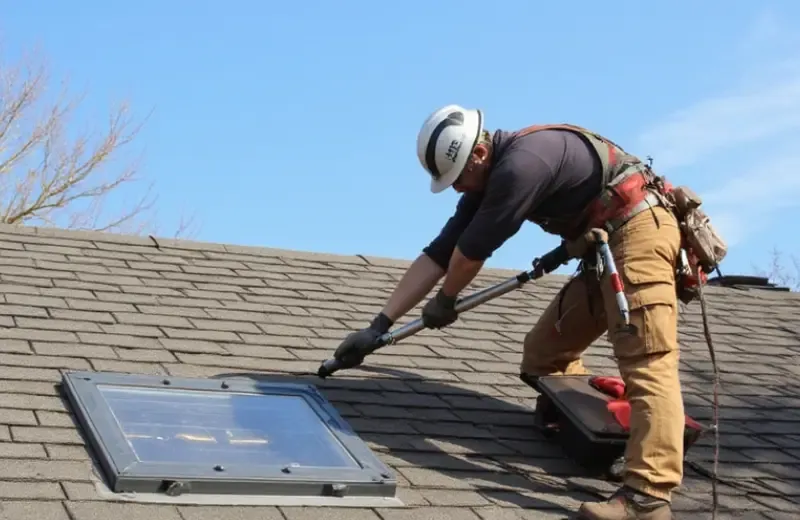
We do full roof inspections after hail and wind events, before a home sale and when you spot a leak. We also cover roof leak detection and repair, skylight leak repair and chimney leak repair. You get photos of every issue we find.

Our approach

Our crews walk the slopes, mark test squares for hail hits, check underlayment at the edges, inspect pipe boots and flashing, and look in the attic for staining, ventilation problems and decking condition. Findings go into a photo report.

In Austin, TX

After spring storms on the I-35 corridor, documentation matters. Adjusters often argue hail versus wear, or call metal dents cosmetic. Clear photos and measurements help you have an informed conversation with your insurer. Under Texas law we won't act as your public adjuster or waive your deductible.

Best for

Homeowners after a hailstorm, buyers and sellers, anyone with a ceiling stain, and roofs over 12 years old that have never had a professional look.

Roof Repair, Patching & Shingle Repair

We handle targeted roof repair, roof patching, roof shingle repair and roof damage repair. That covers fixing blown-off tabs, replacing cracked pipe boots, resealing penetrations and replacing hail-fractured shingles before small problems turn into rotted decking.

Our approach

We match shingle profile and color as closely as we can, nail to manufacturer specs, hand-seal the vulnerable edges and replace damaged underlayment rather than patching over it.

In Austin, TX

Brittle, heat-aged shingles crack easily when someone handles them. On older Austin roofs we lift tabs carefully, and early in the day, before the deck heats up.

Best for

Roofs with localized wind, hail or penetration damage that still have useful life left.

Specialty

Roof Replacement & New Roof Installation

We do complete roof replacement and roof installation, including winter roof replacement when the weather cooperates. Every job includes full tear-off, decking repair, new underlayment, flashing, drip edge and ventilation. We pull permits where they're required.

Our approach

We tear off to the deck, replace rotted sheathing, then install synthetic underlayment, ice-and-water barrier in the valleys, new flashing and a balanced intake-and-exhaust ventilation system. Magnetic sweeps and tarped landscaping keep the site clean.

In Austin, TX

We handle City of Austin permits and inspections, and we work through the separate processes in West Lake Hills, Rollingwood, Sunset Valley and Bee Cave. We submit to HOAs in places like Circle C and Steiner Ranch. Where you have solar, we coordinate removal and reinstall with your solar provider.

Best for

Roofs at the end of their life, layered roofs needing tear-off and tract-home roofs with repeated hail claims.

Asphalt Shingle Roofing: Architectural & 3-Tab

We do asphalt shingle installation, including architectural shingles, Class 4 impact-resistant options and 3-tab shingle roofing for budget-conscious repairs and matching.

Our approach

We recommend specific shingles based on hail exposure, sun orientation, HOA color rules and your insurance goals. We favor impact-rated and reflective products when they make sense.

In Austin, TX

For suburban homes in Pflugerville, Buda and Avery Ranch, Class 4 shingles can earn premium discounts. Texas Property Code §202.011 limits HOAs from banning them.

Best for

Most Austin homes looking for value, HOA compliance and better hail resistance.

Metal Roofing: Standing Seam, Steel & Corrugated

We do metal roof installation, residential metal roofing, standing seam metal roofs, steel roofing, corrugated metal roofing, metal roof repair, and roof flashing for metal and steel roofs.

Our approach

We use concealed-fastener standing seam panels with proper clip spacing for thermal movement, plus matched trim and steel roof flashing. Exposed-fastener corrugated panels work well for barns, outbuildings and rustic designs.

In Austin, TX

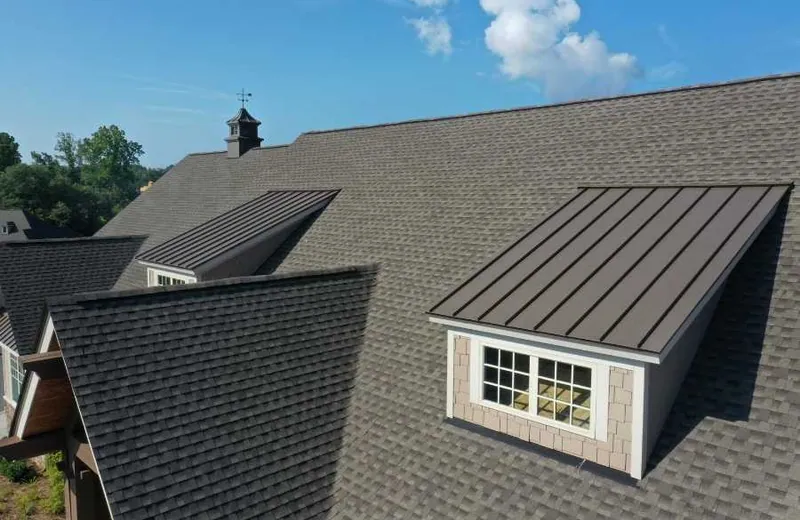
Standing seam metal handles Austin heat and hail well. It's common on modern farmhouse homes and on Hill Country homes in Bee Cave and West Lake Hills. Light colors reflect summer heat.

Best for

Long-term owners who want durability, energy savings and a contemporary or ranch look.

Tile, Slate, Cedar Shake & Copper Roofing

We do tile roofing repair and replacement, slate roof installation, cedar shake roofing and copper roofing for premium and architecturally detailed homes.

Our approach

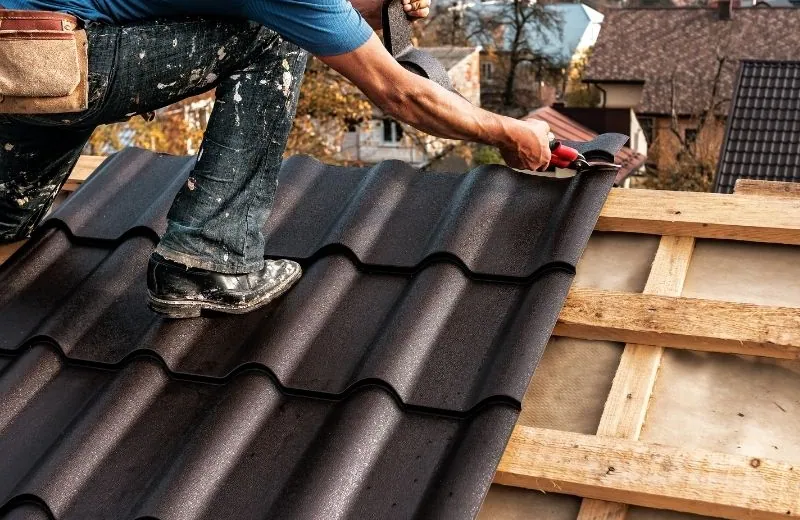
We replace cracked tiles individually when we can, re-lay sections over new underlayment and use copper or high-grade flashing. Crews walk tile carefully, using planned paths and staging.

In Austin, TX

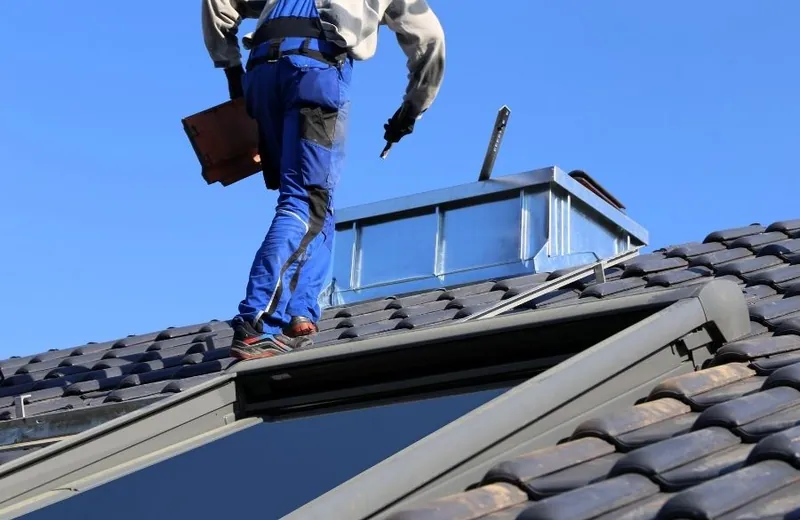
Mediterranean and Hill Country estates in Barton Creek, Rollingwood and Westlake often have clay or concrete tile on steep pitches. We plan safe access, and we're careful with tile that hail has already cracked.

Best for

Higher-end homes where appearance, longevity and matching existing materials matter most.

Flat & Low-Slope Roofing: TPO, EPDM & Commercial

We do flat roof repair and replacement, TPO roofing, EPDM rubber roofing, commercial roofing and commercial roof repair for small buildings, additions, ADUs and infill homes.

Our approach

We correct drainage first by adding tapered insulation and checking scuppers. Then we install heat-welded TPO or fully adhered EPDM with reinforced corners and penetrations.

In Austin, TX

East and Central Austin infill homes, duplexes and ADUs often have low-slope sections. Flash-flood rain and ice events test them hard, and rooftop solar complicates the work.

Best for

Modern infill homes, additions, carports, ADUs and small commercial properties.

Flashing, Chimney & Drip Edge Work

We handle roof flashing, chimney flashing repair, roof drip edge flashing and skylight flashing, the details behind most Austin leaks.

Our approach

Our crews install new step flashing, reglet-cut counter flashing into stone or stucco, and pre-formed or custom-bent metal around chimneys and skylights. We don't rely on caulk.

In Austin, TX

Limestone and stucco walls on west-side homes need proper counter flashing. On east-side clay soils, foundation movement opens joints over time.

Best for

Recurring leaks at walls, chimneys and skylights that patches haven't fixed.

Ventilation, Soffit, Fascia & Gutter Guards

We do roof ventilation installation, soffit and fascia installation and gutter guard installation to protect the roof system and cut attic heat.

Our approach

We calculate the required net free area, balance soffit intake with ridge exhaust, replace rotted fascia and install guards sized for oak and cedar debris.

In Austin, TX

AC runs from May through October here, and better attic airflow lowers shingle temperatures and cooling loads. Guards help a lot under heavy west-side canopy.

Best for

Hot attics, heat-curled shingles, rotted trim and gutters that clog constantly.

Restoration, Maintenance, Coatings & Waterproofing

We do roof restoration, roof maintenance, roof waterproofing and roof coating application to extend roof life when full replacement isn't needed yet.

Our approach

We clean the surface, repair seams and flashing, and apply reflective elastomeric or silicone coatings on suitable low-slope and metal roofs. Scheduled tune-ups catch problems early.

In Austin, TX

Reflective coatings cut surface temperatures dramatically in Austin summers. Pre-storm-season maintenance before March makes sense in a hail market.

Best for

Sound roofs that need more years, low-slope surfaces and owners who want to plan ahead.

Emergency Roof Repair, Tarping & Ice-Event Services

We provide emergency roof repair, emergency roof tarping and roof tarp installation. During rare Central Texas freezes we also handle roof leak repair in winter, ice dam leak repair, water damage from ice dams, professional ice dam removal, roof and gutter ice removal, roof snow removal and heat cable/tape installation.

Our approach

We secure the roof with properly anchored tarps or temporary seals, take photos for insurance and remove ice safely without damaging shingles. Where low-slope sections or gutters keep icing up, we can add heat cable.

In Austin, TX

Uri in 2021 and the 2023 ice storm showed how fast limb strikes and ice dams can overwhelm Austin roofs that weren't built for freezes.

Best for

Active leaks, storm openings, limb strikes and ice buildup on low-slope roofs.

Simple & Transparent

How Our Austin Roofing Process Works

No pressure, no door-knocking and no surprises. Here's what happens from your first call to final cleanup, including the permit, HOA and insurance steps that come with roofing in Austin.

Call or Request an Inspection

  • We ask about the roof's age, recent storms and any leaks
  • We schedule an inspection time that works for you
  • For active leaks, we prioritize tarping
  • We note HOA, historic district or solar details up front

After big hail events demand jumps, so calling early helps you get a spot.

Same day to a few days; faster for active leaks

Roof and Attic Inspection With Photos

  • We walk the roof and check shingles, flashing, valleys and penetrations
  • We look in the attic for ventilation, staining and decking issues
  • We mark and photograph hail and wind damage
  • We walk you through what we found

On steep Hill Country roofs, we use safe access methods and may photograph some areas from ladders or the ground.

About 45–90 minutes on site

Photo-Documented Estimate and Options

  • We give you a written estimate with photos of every issue
  • We lay out repair versus replacement options with pros and cons
  • We give material guidance on Class 4 shingles, metal, tile or TPO
  • If you're interested, we discuss financing options

If you're filing a claim, our photos help you talk with your adjuster. We follow Texas Insurance Code Chapter 707 and never waive deductibles.

Usually within a few days of inspection

Permits, HOA Approval and Scheduling

  • We pull City of Austin or suburban city permits as required
  • We help prepare HOA submittals for color and material
  • We order materials and confirm delivery logistics
  • We coordinate solar removal if needed

Historic district reviews in Hyde Park or Travis Heights and strict HOAs like Circle C can add time.

Several days to a few weeks depending on jurisdiction

Installation, Cleanup and Final Walkthrough

  • We protect landscaping, AC units and driveways
  • Crews start early to avoid the worst summer heat
  • We do tear-off, decking repair, underlayment, flashing, ventilation and roofing
  • We run a magnetic nail sweep, clean up and do a final inspection with photos

During summer heat, early starts protect both the crew and the materials. Shingles scuff easily on a 150°F deck.

Most homes take 1–3 days; metal, tile and complex roofs take longer
The Bee Caves Roofing Pros Difference

Why Austin Homeowners Choose Bee Caves Roofing Pros

Local West Austin Roofers, Not Storm Chasers

We're based on Austin's west side and have served the area since 2020. We're not a crew that shows up after a hailstorm and leaves when the claims dry up. We know the Bee Cave Road corridor, the limestone-and-stucco detailing in West Lake Hills and Rollingwood, the oak canopy that clogs valleys in Shady Hollow, and the tract roofs aging out in Pflugerville and Buda. When something needs attention after the job, you'll know exactly who to call, and we'll still be here to pick up.

Bonded and Insured for Your Protection

Texas doesn't license roofing contractors at the state level, so the protections a contractor carries matter more here than in most states. Bee Caves Roofing Pros is bonded and insured. That protects you, your property and our crews if something goes wrong on the job. Ask any roofer you're considering for proof of coverage before they set a ladder against your house. We're happy to provide ours, and we think every homeowner should ask for it.

Photos With Every Estimate

You shouldn't have to take a roofer's word for it. Every estimate we write includes photos of what we found: hail hits, lifted tabs, cracked pipe boots, failed flashing, attic staining. You'll see the problem before you decide how to fix it. If you're working an insurance claim, that documentation helps you talk through hail-versus-wear questions with your adjuster. We don't act as public adjusters and we never waive deductibles, because Texas law forbids both.

Built Around Underlayment, Flashing and Ventilation

Shingles get the attention, but Austin roofs usually fail at the details. Underlayment cooks under 150°F decks. Flashing pulls away from stone walls. Attics with too little ventilation bake shingles from below and push cooling bills up through a May-to-October AC season. We give these components the same care as the visible surface: balanced soffit-to-ridge airflow, real counter flashing instead of caulk and quality synthetic underlayment. That's how a roof makes it through Central Texas summers.

Steep, Complex Rooflines Handled Safely

Many west Austin homes have steep pitches, multiple valleys, turrets, dormers and heavy tile or metal. Before anyone climbs, we plan safe access, material staging and debris handling. We protect landscaping, pools and limestone hardscape, and we keep driveways clear. Tight Hill Country lots in Bee Cave, Hudson Bend and Barton Creek need that planning, and so do historic Central Austin homes where neighbors are close.

The Right Material for Hail, Heat and HOAs

We install and repair asphalt shingle, standing seam metal, tile and low-slope systems, so we're not pushing one product. For a Falcon Pointe home, that might be Class 4 architectural shingles that satisfy the HOA and may lower premiums. For a Westlake modern farmhouse, it might be light-colored standing seam. We'll explain the tradeoffs in cost, lifespan, insurance and energy performance in plain language.

Financing to Fit Your Budget

A wind/hail deductible of 1 to 2% of dwelling coverage can mean thousands out of pocket, and some roofs need replacing without any claim at all. Financing is available, so you can take care of a failing roof now instead of risking water damage while you save. We'll go over your options alongside the estimate so you can make a clear decision.

Trusted Locally

A Local Austin Roofer You Can Verify

Since 2020, west Austin homeowners have trusted us with roofs that face Central Texas hail, heat and heavy spring rain. We back our work with photo documentation and bonded, insured crews.

2020
Serving Austin Since
20 Miles
Service Radius
100%
Estimates Include Photos
Bonded & Insured
For Your Protection
BondedInsuredFinancing available
Where We Work

Roofing Service Areas Around Austin

Our home base is west Austin and the Bee Cave Road corridor, and our crews work within about a 20-mile radius. That covers Hill Country estates, older central neighborhoods, fast-growing northern and eastern suburbs, and rural-edge communities to the southeast.

West Austin & Hill Country

West Lake HillsRollingwoodBee CaveHudson BendSunset Valley

Central, South & North Austin

AustinShady HollowManchacaJollyvilleWells Branch

East & Southeast Suburbs

PflugervilleManorBudaDel ValleWebbervilleMustang Ridge, Creedmoor & Garfield

We cover roughly a 20-mile radius centered on west Austin. If you're near the edge of that range, call and we'll confirm availability for your address. Not sure if we cover your area? Call (512) 469-0065.

Transparent Pricing

How Much Does a Roof Cost in Austin, TX?

Roofing costs in Austin depend on material, roof complexity, access and what's hiding under the shingles. The ranges below reflect typical current Austin-area pricing. Your photo-documented estimate will show exactly what's driving the cost on your roof.

Primary Factor

Roofing Material

Material choice moves the price more than anything else. Standard architectural shingles are the most affordable full-replacement option. Class 4 impact-resistant shingles typically cost 10 to 30% more but can earn insurance discounts. Standing seam metal often runs two to three times the cost of shingles. Clay or concrete tile, slate and copper sit at the premium end. For low-slope sections, TPO and EPDM are priced separately by square foot.

Primary Factor

Roof Size, Pitch and Complexity

Roofers price by the square (100 square feet). Steep pitches need extra safety setup and slow the work. Lots of valleys, dormers, turrets and wall intersections add flashing labor and material waste. A simple gable ranch in Crestview costs far less per square than a multi-level Hill Country home in West Lake Hills with eight valleys and stone walls.

Secondary Factor

Tear-Off Layers and Decking Repairs

If your roof already has two layers, code requires a full tear-off, and extra layers add disposal cost. Older Central Austin homes often reveal rotted decking or skip-sheathing that needs solid plywood or OSB over it. We photograph decking conditions and price replacement per sheet, so you're not surprised mid-job.

Secondary Factor

Flashing, Ventilation and Upgrades

Replacing step and counter flashing at limestone or stucco walls, adding ridge and soffit vents, upgrading underlayment or installing gutter guards adds cost up front. These are also the items that keep an Austin roof from failing early. We itemize them so you can see what each one does.

Situational Factor

Permits, HOA, Solar and Access

City of Austin and suburban permits, historic district reviews and HOA submittals add fees and time. If you have rooftop solar, removal and reinstallation by your solar provider is a separate cost. Tight lots, steep driveways and heavy tree cover can also affect labor and staging.

Typical projectDetailsEstimated range
Hail damage repair on a suburban homePflugerville or Wells Branch, architectural shingles; replace damaged sections, pipe boots and ridge caps$450 – $1,800
Architectural shingle replacementAbout 2,000 sq ft home (roughly 25–30 squares), single-layer tear-off, new underlayment, flashing and ventilation$11,000 – $19,000
Class 4 impact-resistant shingle replacementCircle C or Avery Ranch two-story, HOA-approved color, moderate complexity$15,000 – $26,000
Standing seam metal roofWest Lake Hills or Bee Cave home, about 3,000 sq ft of roof, steep pitch with multiple valleys$38,000 – $75,000

Financing is available to help you cover a deductible or full replacement without draining savings. Ask us for details with your estimate. A properly vented, impact-resistant roof can lower attic temperatures and cooling costs, may qualify for insurance premium discounts and protects your home's value.

Questions & Answers

Austin Roofing Questions, Answered

How much does a new roof cost in Austin?

Most Austin homeowners pay about $11,000 to $19,000 to replace a typical 2,000-square-foot home's roof with architectural shingles. Class 4 impact-resistant shingles usually push that to $15,000 to $26,000. Standing seam metal commonly runs $30,000 to $75,000 depending on size and pitch, and tile or slate can go higher. Small repairs often fall between a few hundred and about $1,800. The biggest variables are material, steepness, how many valleys and wall intersections the roof has, and whether rotted decking turns up during tear-off. Every estimate we write includes photos, so you can see what's driving the price.

Do I need a permit to replace my roof in Austin?

Yes, inside the City of Austin's full-purpose jurisdiction. The Development Services Department requires a building permit and inspections for re-roofing. West Lake Hills, Rollingwood, Sunset Valley, Bee Cave, Pflugerville, Manor and Buda run their own permit processes. Unincorporated areas like Shady Hollow, Manchaca and Hudson Bend often need little county paperwork, but your HOA and insurer may still have requirements. Homes in historic districts like Hyde Park or Travis Heights may need review for visible material changes. We pull the required permits and help with HOA submittals.

How long does a roof replacement take?

Most single-family shingle roofs in Austin take one to three days once work starts. Standing seam metal, tile, steep Hill Country roofs and homes with lots of decking repair can take longer. Before work starts, permits, HOA approval and material delivery can add anywhere from several days to a few weeks. Historic district reviews add more. In summer our crews start early to avoid the worst heat, which protects both the workers and the shingles. We'll give you a realistic schedule with your estimate.

What should I do after a hailstorm in Austin?

Schedule an inspection within a few weeks, even if you can't see damage from the ground. Hail bruises often don't leak for months, and insurance policies have time limits for filing. Check for dented gutters, vents or AC fins and for granules at your downspouts, but don't climb on the roof yourself. We'll inspect it and give you photos of what we find. Be cautious with door-knockers after a storm. Texas law bans contractors from waiving or rebating your deductible, and anyone who offers to is a red flag.

Are Class 4 impact-resistant shingles or metal worth it in Austin?

For many Austin homeowners, yes. Class 4 (UL 2218) shingles hold up better against the 1- to 2-inch hail common along the I-35 corridor, and many insurers offer premium discounts for them. Standing seam metal costs more up front, but it handles heat and hail well, and light colors reflect summer sun. Texas Property Code §202.011 limits HOAs from banning certain impact-resistant and energy-efficient roofing. We'll compare cost, lifespan and insurance impact for your specific home.

How can I make my roof last longer in Central Texas heat?

Start with ventilation. A balanced soffit-intake and ridge-exhaust system keeps attic heat from cooking shingles from below. Keep valleys and gutters clear of oak and cedar debris, especially under west-side canopy. Have the roof inspected before storm season starts in March and again after any major hail or wind event. Replace cracked pipe boots and failed sealant promptly. On low-slope roofs, reflective coatings can lower surface temperatures significantly. Small maintenance items cost far less than the decking and drywall damage they prevent.

When should I repair versus replace my roof?

Repair makes sense when damage is limited to one area, the shingles are still flexible and the roof has meaningful life left. Replacement is usually the better call when shingles are brittle and losing granules everywhere, when there are multiple leaks, when the roof has widespread hail bruising, or when it's over about 15 to 18 years old in Austin's heat. Two existing layers also force a full tear-off. Our photos show you the condition so you can decide with real information.

Do you handle emergency leaks and storm damage?

Yes. We provide emergency roof repair and tarping for active leaks, limb strikes and storm openings. That includes the rare freeze events like Winter Storm Uri and the 2023 ice storm, when ice dams formed on low-slope roofs. We secure the roof to stop more water from getting in, photograph the damage for your insurance records and then schedule the permanent repair. If water is coming in, call right away, and move valuables and electronics away from the leak while you wait.

Find Us

Serving Austin, TX & Nearby

7000 Bee Caves Rd #173, Austin, TX, 78746

Ready When You Are

Get a Photo-Documented Roof Inspection in Austin

Whether hail just rolled through, a stain showed up on your ceiling or your roof is simply getting older, find out exactly where it stands. You'll get clear photos and honest options, with no pressure.

  • A thorough roof and attic inspection by a local west Austin crew
  • Photos of every issue we find, included with your estimate
  • Straight talk on repair versus replacement and material options
  • Help with City of Austin, suburban permit and HOA requirements
  • A bonded and insured contractor on your property
  • Financing available for repairs and replacements
  • Careful site protection and full cleanup on every job

We serve Austin, West Lake Hills, Rollingwood, Bee Cave, Sunset Valley, Shady Hollow, Pflugerville, Buda, Manor and surrounding communities within about 20 miles.

Active leak or storm damage? Call now for emergency roof repair and tarping.

Bonded · Insured

Bee Caves Roofing Pros Free estimates across Austin, TX